Building blocks of a real-time wallet tracker
Monitoring cryptocurrency wallet activity is essential for anyone looking to stay informed about transactions, secure assets, and spot unusual behavior. Instead of manually checking your wallet or polling the blockchain constantly—both time-consuming and costly—wallet trackers give you immediate, automated notifications whenever critical events occur.
In this comprehensive guide, we’ll break down the four core components of a wallet tracker, focusing on Ethereum for simplicity (though the same principles apply to layer 2 solutions like Arbitrum or Optimism, and other chains such as Solana).
Why Wallet Tracking Matters
- Real-Time Updates: Get notified the second funds move in or out of your wallet.
- Security: Detect suspicious activity before it’s too late.
- Resource Management: Eliminate the overhead of continuously polling the blockchain.
- Convenience: Centralize all your wallet notifications in one place, like a Discord channel or a mobile app.
1. The Monitored Blockchain
Definition: This is the blockchain where all transactions take place. For this example, we’re focusing on Ethereum, although the same process can be adapted for popular layer 2 rollups like Arbitrum, Optimism, and other chains such as Solana.
Tip: If you’re new to blockchains or smart contracts, consider checking out our Intro to Blockchains blog post to get up to speed before diving deeper into wallet tracking.
2. The Notifier
To monitor wallets, you could poll the chain every minute or two, but this would result in a huge overhead, especially if you use an API with a limited rate or credits.
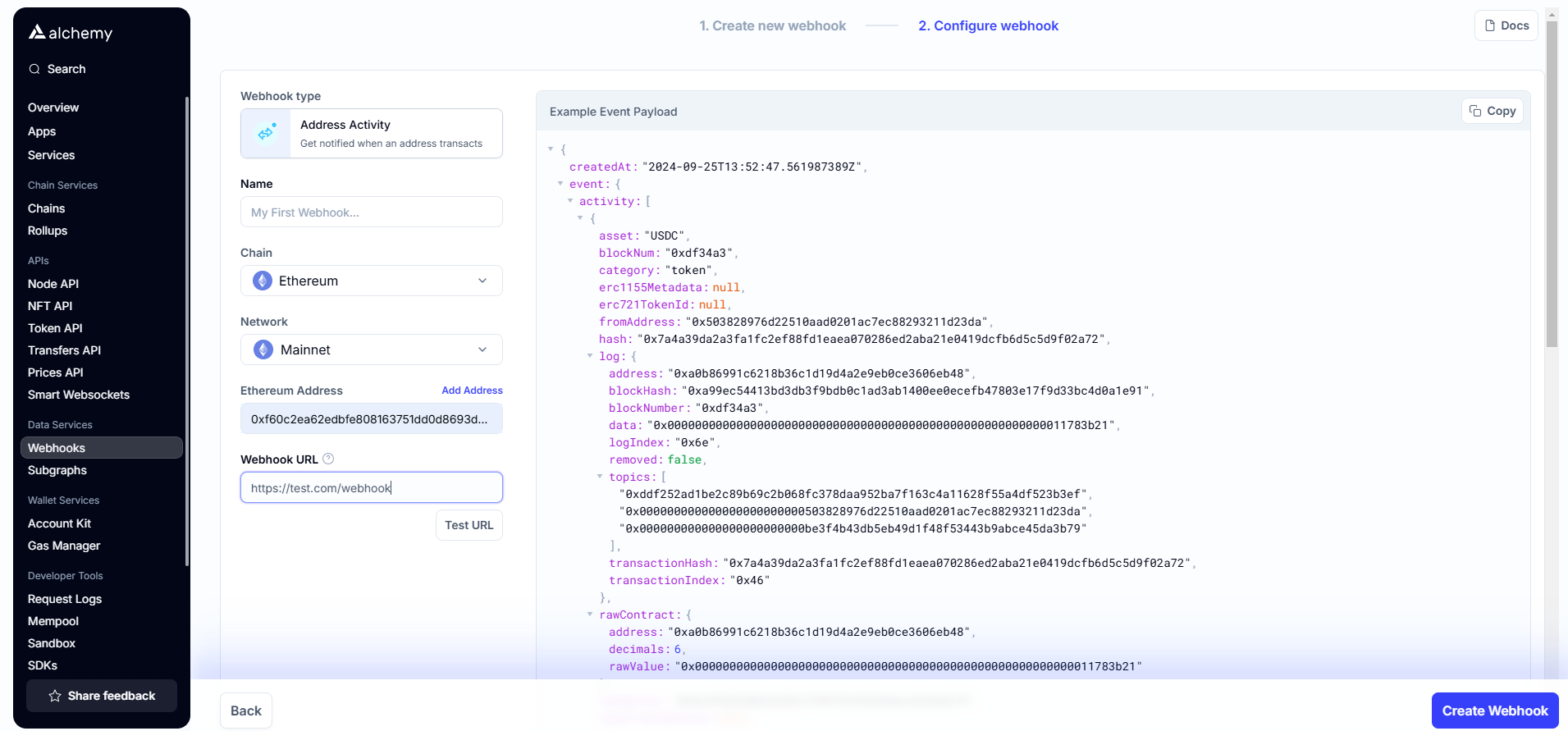
The solution comes with a "Notifier". It's a third-party software that listens to the blockchain and calls a webhook that you provide when an event occurs on the blockchain.
In our case for Ethereum, and most of its rollups, we could use Alchemy notifier (or Helius for Solana). We can configure it to certain events, and filter out on the wallets we want.
3. The API
The API endpoint is your custom webhook that receives data from the Notifier. It processes this incoming information and transforms it into a format you can use or store. If needed, the API can also make additional requests to the blockchain to gather more details about each event, such as transaction metadata or token balances (this could require more requests to the blockchain, but it's still has significantly less overhead than polling the chain).
Key Considerations:
- Security: Ensure your endpoint is secure to prevent unauthorized access.
- Scalability: Build with growth in mind, especially if you plan to monitor multiple wallets.
- Data Transformation: Convert raw blockchain data into human-readable messages or store it in a database for future analysis.
4. The Notification Platform
After processing the request, our API should notify the users of the event that happened. Typically it would be a message to a discord channel or a notification over an application.
Popular Options:
- Discord: Great for community-focused projects or teams collaborating on a shared wallet.
- Mobile Push Notifications: Ideal for on-the-go alerts.
- Email or SMS: Good for users who prefer traditional channels.
- In-App Alerts: For projects with their own applications, real-time in-app popups can be highly engaging.
No matter which channel you choose, the goal is to ensure users see the notification quickly and can act on it if needed.
5- Putting It All Together
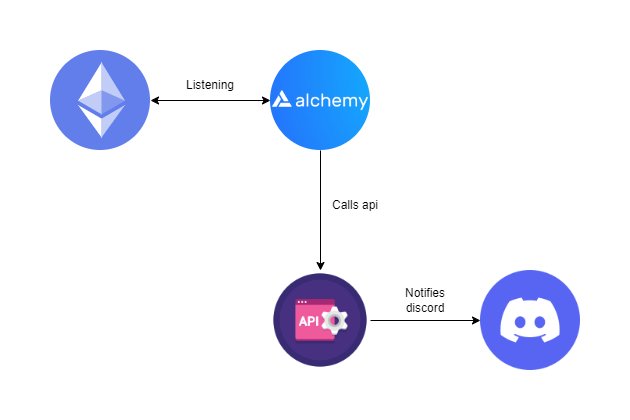
- Choose Your Blockchain: Start with Ethereum if you want a well-supported, widely used network.
- Set Up a Notifier: Use Alchemy Notify (or a similar service) to monitor specific wallet addresses or contract interactions.
- Configure Your API: Build a webhook endpoint that can handle and process event data from the Notifier.
- Send the Alert: Push notifications to Discord, SMS, email, or in-app messages to keep users informed.
Final Thoughts
A real-time wallet tracker empowers you to stay on top of your crypto assets, ensures fast response to threats or unexpected events, and streamlines the monitoring process for multiple wallets and blockchains. Whether you’re an individual crypto enthusiast, a dApp developer, or managing institutional funds, setting up an effective wallet tracker is a game-changer.